About ArrangementLabs.ai
A small team building the AI arrangement tool we needed and couldn't find.
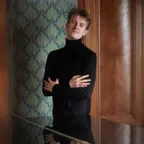
Marcin Konopka
Founder, developer, musician
Marcin is a musician and software engineer with years of experience in both disciplines — performing, composing, and building software in parallel. He studied piano performance and computer science, and spent years working with different ensembles where the same problem kept surfacing: a score needed adapting to a different instrumentation, and nothing did it well. Commercial transcription tools only convert file formats. Generative AI models create new music rather than adapting existing pieces. Manual arrangement takes hours or days that simply aren't there at 11 PM before a rehearsal. That collision led to ArrangementLabs.ai — the tool Marcin wanted to have. He built BandArranger: an 80-million-parameter Transformer model that generates arrangements bar by bar in the REMI-z token format, with a feedback loop where user ratings and expert corrections compound into a better model over time. He runs the full stack himself — backend, ML pipeline, GCP deployment — and the project demonstrates that deep technical work and musical craft can operate together in a single product.
- Music arrangement
- Software engineering
- AI models for music
- Cloud infrastructure
- Piano and performance
Arranger-Composer
Conservatory-trained composer + arranger
The musical credibility of ArrangementLabs.ai comes directly from a working composer and arranger with conservatory training and credits across European concert and film music. His role in the project is critical: when the model produces an arrangement, he evaluates whether it actually works musically — whether the voice leading is natural, whether the instrumental dynamics are convincing, whether the output is genuinely performable by real musicians. That expert evaluation feeds the HITL (human-in-the-loop) pipeline, through which the model improves with each new round of feedback. Name and credits will appear here when he's ready to go public-facing.
- Orchestral arrangement
- Music composition
- Music theory
- Film music
- AI arrangement quality evaluation

AI Engineer / Full-Stack
Model training + infrastructure
Our AI engineer owns the model and infrastructure side of the product — fine-tuning BandArranger on expert data, the HITL pipeline (SFT → KTO → DPO), and system architecture from database through job queues to the GPU worker. They combine machine learning competence with product engineering, which is a rare combination in projects at the intersection of music and AI. Name and bio will appear here when they're ready to go public-facing.
- Machine learning
- Transformer model fine-tuning
- AI systems engineering
- Full-stack development
- GPU infrastructure
Why we built this
The starting point was concrete: I had a solo score and needed it arranged for string quartet for a rehearsal the next day. Existing tools handled file format conversion but not arrangement — they didn't know how to distribute melodic voices across the instruments, how to manage natural voice leading, how to adapt the dynamic range to a quartet. The manual work took four hours. The next time this happened, I thought: maybe I'll write a script. The script became a model, the model became a product. But the motivation runs deeper than convenience. Music arrangement is a craft that for centuries has been accessible only to those with the time and resources to master it — or the money to hire someone who had. ArrangementLabs.ai is an attempt to make that craft more accessible: so a composer without arrangement skills can hear their music performed by a quartet, so a teacher can adapt repertoire to fit the classroom ensemble, so a small group can perform a piece written for a larger instrumentation. We're not trying to replace arrangers — we're trying to give a tool to those who don't have one, and save time for those who don't have enough of it.
Get in touch
- General & press: hello@arrangementlabs.ai
- Try the tool: Join the beta waitlist
- Stay updated: Read the blog · RSS